+91-98111-67809
How to Choose the Best Pet Insurance Policy: A Comprehensive Guide
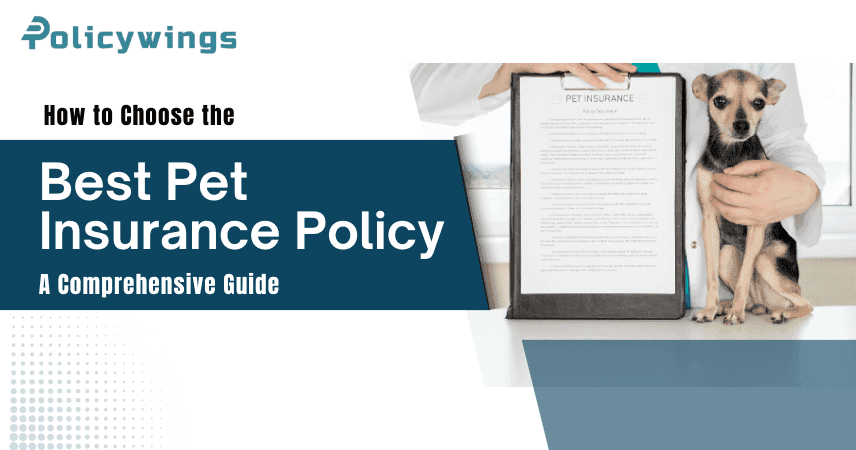
Making sure your pets get medical attention involves buying a pet insurance policy as your financial backup plan. Getting veterinarian care and continuing medical care becomes easier when you choose a suitable insurance coverage for your pet.
Table of Contents
- Understanding Pet Insurance
- What is pet insurance?
- How Does Pet Insurance Work?
- Types of Pet Insurance Coverage
- Key Factors to Consider When Choosing a Pet Insurance Policy
- Coverage Options
- Cost and Premiums
- Deductibles, Reimbursements, and Payout Limits
- Waiting Periods and Exclusions
- Reputation and Customer Reviews
- Tip: Choose a provider with good reviews and transparent claim processes
- How to Research Providers:
- Comparing Pet Insurance Providers
- How to Research and Compare Plans
- Policy Wings’ Recommendations
- Tips for Choosing the Right Policy for Your Pet
- Match Coverage to Your Pet’s Needs
- Consider Long-Term Costs
- Read the Fine Print
- Latest Trends in Pet Insurance for 2025
- Conclusion
Thanks to our status as pet owners, we work to give the best experience possible to our animals. Good pet owners take care of their pets by making sure they eat healthily and seeing their vets while living in safe conditions.
Medical emergencies force pet owners to pay large veterinary costs which strains their budget for caring for their beloved pets. A pet insurance policy steps in at this point to help.
In this blog, we will share all the necessary information to select the best pet insurance policy for your pet which includes various policy types, payment elements, plan evaluations, and specialist tips.
Understanding Pet Insurance
What is pet insurance?
When illness or injuries strike your pet there is a way to protect your finances: a Pet Insurance Policy helps you pay for help from the vet. Your pet insurance coverage helps you pay for a part of your pet’s medical costs so you can access top treatment at all times.
Under this type of coverage you pay the vet now then submit reimbursement claims to the insurance provider. When you select firms that offer direct billing services they pay your vet directly so you need to spend less out of your own pocket.
A Pet Insurance Policy pays for medical costs to ease the financial pressure of urgent medical procedures and continuous healthcare.
Your pet’s health depends on picking the best insurance plan and giving you comfort at the same time. Choosing between various policy options becomes difficult even though many plans exist.
How Does Pet Insurance Work?
Pet insurance typically follows these steps:
- Choose a plan: Select a policy based on your pet’s age, breed, and medical history.
- Pay monthly premiums. The amount depends on coverage, deductibles, and other factors.
- Visit the vet. Take your pet for treatment when needed.
- Submit a claim. Pay the bill and send a claim to the insurer.
- Get reimbursed: The insurer processes the claim and reimburses a percentage based on your policy.
Types of Pet Insurance Coverage
- Accident-Only Plans protects against injury types including fractures, wounds, and accidental poisonings.
- These plans protect against sickness, including infections, cancer and long-term medical illnesses.
- These Plans Take Care of Both Medical Emergencies and Regular Healthcare Services
- Wellness Plans Provide Basic Health Care, which Includes Regular Checkups Vaccinations and Dental Cleanings
Your pet insurance selection depends on your pet’s health needs alongside their breed risks and available finances.
Key Factors to Consider When Choosing a Pet Insurance Policy
/*! elementor - v3.22.0 - 26-06-2024 */
.elementor-widget-image{text-align:center}.elementor-widget-image a{display:inline-block}.elementor-widget-image a img[src$=".svg"]{width:48px}.elementor-widget-image img{vertical-align:middle;display:inline-block}
Key Factors to Consider When Choosing a Pet Insurance Policy
Coverage Options
- Accident and Illness Coverage: Covers injuries, diseases, and hospital stays.
- Chronic Conditions: Includes long-term illnesses like diabetes and arthritis.
- Hereditary problems develop best in the following breeds.
- Wellness & Preventive Care: Routine checkups, vaccinations, and dental cleanings.
- Your insurance policy may include coverage for professional physical treatment sessions and related eastern therapies.The variety of pet insurance plans makes them different in their coverage range. Plans exist either for emergency care or for covering preventive medical needs. When evaluating policies, check for:
- Before your purchase, check details about what benefits and exclusions are part of the policy.
- These plans protect against sickness, including infections, cancer and long-term medical illnesses.
- These Plans Take Care of Both Medical Emergencies and Regular Healthcare Services
- Wellness Plans Provide Basic Health Care, which Includes Regular Checkups Vaccinations and Dental Cleanings
Your pet insurance selection depends on your pet’s health needs alongside their breed risks and available finances.
Cost and Premiums
The amount you pay for a debit insurance policy depends on different elements including:
- The insurance rate increases according to a pet’s age and susceptibility to medical conditions while they belong to certain breed groups.
- Plans that cover complete health issues usually demand more money than basic accident protection.
- The prices of veterinary treatment in different areas determine insurance rates across regions.
- Choosing higher deductible amounts decreases your premium charges but raises how much money you pay yourself before insurance help arrives.
To choose wisely assess different plans and decide which one gives you the best value for your money.
You Need to Contrast Policies to Find Affordable Insurance Plans That Offer Good Protection.
- Look at different policies to identify affordable plans with quality protection.
- Do not select the least expensive plan until you verify its benefits.
- If you own multiple pets look for discounts that cover several pets at once.
Deductibles, Reimbursements, and Payout Limits
It is essential to know your personal costs versus what insurance will cover in detail.
- Your insurance starts paying only after you pay your annual or incident-based deductible. Can be annual or per-incident.
- Insurance companies pay a portion of the bill at the specified rates (70%, 80%, or 90%).
- The insurer establishes the highest yearly and per-condition payment amounts they will provide.
Decide your reimbursement rate based on your finances, yet pick a level of insurance that offers good coverage.
**Example:
**If your pet’s surgery costs ₹50,000 and your plan has:
- ₹5,000 deductible
- 80% reimbursement rate
- ₹1,00,000 annual payout limit
Your insurer will cover ₹36,000 (80% of ₹45,000 after deductible).
Waiting Periods and Exclusions
The cover needs to wait a defined span of time before taking effect in every insurance policy (14 days for sickness and 48 hours for injuries). Insurers also do not pay for:
- Pre-existing conditions
- Elective operations (e.g., tail docking, ear cropping)
- Breeding-related costs
Tip: Insure your pet early to avoid pre-existing condition problems.
Reputation and Customer Reviews
Before choosing an insurer, consider:
- Claim settlement ratio: claim processing speed.
- Customer service: responsiveness and quality of support.
- Online reviews: real feedback from other pet owners.
Tip: Choose a provider with good reviews and transparent claim processes
How to Research Providers:
- Find customer reviews at reputable review websites.
- Read social media feedback.
- Ask other pet owners for business referrals.
Comparing Pet Insurance Providers
How to Research and Compare Plans
Use online comparison tools to evaluate different insurers. Check for:
- Coverage inclusions & exclusions
- Premium costs & deductible options
- Reimbursement rates & payout limits
Policy Wings’ Recommendations
Policy Wings is a trusted source for pet insurance comparisons, providing insights into the best plans available. Visit Policy Wings for detailed comparisons.
Tips for Choosing the Right Policy for Your Pet
Match Coverage to Your Pet’s Needs
- Young pets: wellness plans for preventive care.
- Senior pets: Comprehensive plans covering chronic conditions.
- Active pets: Accident coverage for injuries.
Consider Long-Term Costs
- Cheap policies may not offer adequate coverage.
- Look for policies with lifetime benefits rather than annual limits.
Read the Fine Print
- Understand exclusions and waiting periods.
- Look for hidden fees or restrictions on claims.
Latest Trends in Pet Insurance for 2025
- AI systems help customers design insurance plans through personal health records of their pets.
- Digital-First Insurance Helps Companies Process Claims Faster by Using Smartphone Applications
- Mental Health Coverage for Pets – Support for anxiety and behavioral issues.
- The company wants to focus more on preventing diseases to keep pets healthy in the long term.
Conclusion
Selecting an appropriate pet insurance policy helps you pay for your pet’s top-quality healthcare while preventing financial difficulties.
Evaluating different policies provides practical ways to select the best insurance coverage suited for your pet’s requirements.
The best way to find the best health insurance provider in India is through Policy Wings’ expert insights on high-rated healthcare plans.
Get proper pet insurance now to secure your pet’s health.